
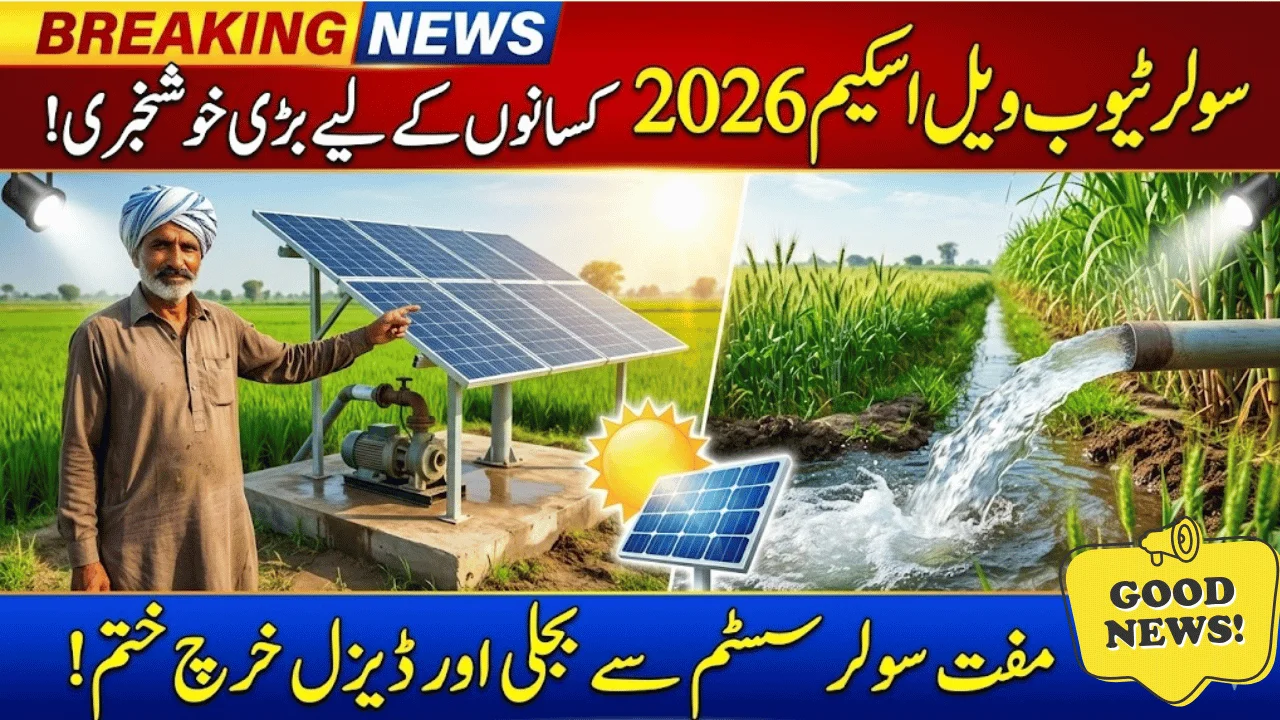
Farmers in Punjab often face high electricity bills and expensive diesel costs when running irrigation tubewells. To reduce these expenses and promote clean energy, the provincial government has introduced the Punjab Solar Tubewell Scheme 2026.
This initiative aims to help farmers switch from traditional electricity or diesel-powered tubewells to solar-powered irrigation systems. By using solar energy, farmers can reduce operating costs while ensuring a reliable water supply for their crops.
The program is being implemented with support from the Punjab Agriculture Department and the Punjab Energy Department as part of Punjab’s broader effort to promote renewable energy in agriculture.
What Is the Punjab Solar Tubewell Scheme?
The Punjab Solar Tubewell Scheme is a government project designed to convert existing agricultural tubewells into solar-powered systems. Instead of running on diesel or grid electricity, the pumps operate using energy produced by solar panels.
Solar panels installed near the tubewell generate electricity during daylight hours. This electricity powers the pump that draws water from underground for crop irrigation.
The goal is to provide farmers with a long-term solution to rising fuel prices while supporting environmentally friendly farming.
Key Features of the Scheme
The scheme includes several benefits that make it attractive for farmers across Punjab.
Subsidized solar installation: The government provides financial assistance to reduce the cost of solar panels and equipment.
Priority for small farmers: Small and medium-sized landowners are expected to receive priority during selection.

Reduced energy expenses: Farmers can save money by eliminating diesel fuel or high electricity bills.
Long-term energy solution: Once installed, solar systems require minimal operating costs.
Transparent selection process: Applications are verified through official records to ensure fairness.
These features aim to make solar irrigation accessible to a large number of farmers.
Who Can Apply?
To qualify for the Solar Tubewell Scheme 2026, farmers must meet certain eligibility requirements.
Applicants generally need to:
-
Be a resident of Punjab
-
Own agricultural land

-
Have a registered tubewell on their property
-
Provide a valid CNIC
-
Submit land ownership documents
Farmers who currently use diesel or electric tubewells are encouraged to apply for conversion to solar systems.
Verification will be conducted through official government databases to confirm land records and applicant details.
How to Apply for the Solar Tubewell Scheme
The application process is expected to be simple so that farmers from rural areas can easily participate.
Basic application steps:
-
Visit your nearest Agriculture Extension Office.
-
Submit a copy of your CNIC and land ownership documents.
-
Provide details about your existing tubewell.
-
Complete the verification process conducted by officials.
-
Wait for approval notification from the department.
Once approved, installation teams will coordinate with selected farmers to install solar panels and related equipment.
Benefits for Farmers
Switching to solar irrigation offers several long-term advantages.
Lower operating costs: Farmers no longer need to buy diesel or pay high electricity bills.
Reliable irrigation: Solar-powered pumps can provide a consistent water supply during daylight hours.
Protection from power outages: Solar systems work independently of the electricity grid.

Higher crop productivity: Reliable irrigation helps maintain healthy crops and better yields.
Environmentally friendly farming: Solar energy reduces pollution and supports sustainable agriculture.
For many farmers, this change could significantly reduce yearly farming expenses.
Why This Scheme Is Important
Agriculture remains one of the most important sectors in Punjab’s economy. However, rising fuel prices and electricity shortages have made irrigation increasingly expensive.
The Solar Tubewell Scheme 2026 aims to solve these problems by introducing renewable energy into farming practices. By helping farmers reduce energy costs and increase crop productivity, the program supports both economic stability and environmental protection.
For rural communities, solar-powered irrigation could be a major step toward sustainable agriculture and energy independence in the years ahead.